
Pa’marakka is one of the most distinctive traditional musical and vocal arts of the Torajan people in South Sulawesi, Indonesia. Deeply connected to the traditional funeral ceremony known as Rambu Solo’, this cultural performance represents an important expression of grief, respect, remembrance, and spiritual values within Torajan society.
Unlike ordinary traditional music performed for entertainment, Pa’marakka has a special role in funeral ceremonies. It is performed as a form of lamentation, allowing family members and the community to express their sorrow over the passing of a loved one. Through emotional singing and the gentle melodies of traditional bamboo flutes, Pa’marakka creates an atmosphere of reflection and remembrance during one of the most important ceremonies in Torajan culture.
For international visitors exploring Toraja, understanding Pa’marakka offers a deeper perspective on the relationship between music, death, family traditions, and cultural identity in the highlands of South Sulawesi.
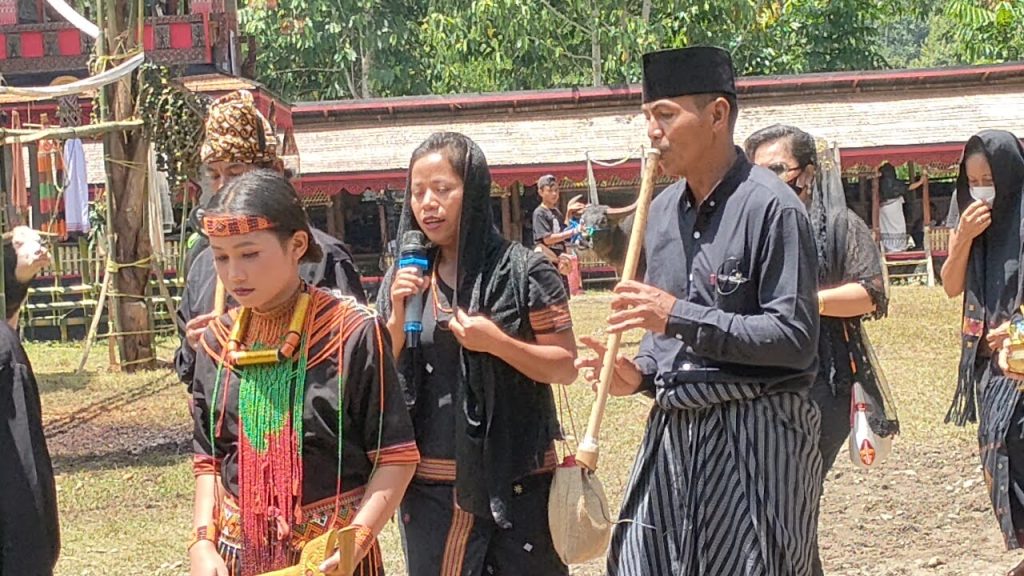
Understanding Pa’marakka in Torajan Culture
Pa’marakka is a traditional musical and vocal performance associated with the funeral traditions of the Torajan people. Its central element is bating, a form of lamentation or sorrowful singing expressing feelings of loss and mourning.
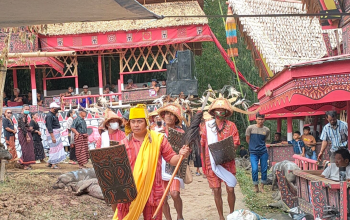
The performance is traditionally presented during the Rambu Solo’ funeral ceremony, which is one of the most significant cultural events in Toraja. The ceremony is organized to honor a deceased family member and provide an appropriate traditional farewell according to the family’s customs and circumstances.
In Torajan society, death is not understood merely as the end of an individual’s life. It is also an important stage in the traditional cultural and spiritual understanding of human existence. Consequently, funeral ceremonies involve various activities, symbolic expressions, music, traditional architecture, and community participation.
Within this setting, Pa’marakka provides an artistic way to communicate emotions that may be difficult to express through ordinary conversation.
The songs often contain expressions of sadness, memories, affection, and respect for the deceased. Their emotional character makes Pa’marakka different from celebratory traditional music commonly performed during festivals or cultural entertainment.
The Sound of Suling Lembang
One of the most recognizable musical elements associated with Pa’marakka is the suling lembang, a traditional bamboo flute from Toraja.
The instrument produces a gentle and melodic sound that complements the emotional character of the lamentation. Its tones create an atmosphere of sadness and contemplation, supporting the vocal expressions performed during the ceremony.
The suling lembang is generally made from bamboo and played by blowing air through the instrument. Its sound is an important part of the traditional musical identity of the Torajan people.
During Pa’marakka performances, several flute players may sit together, often arranging themselves in a semicircle. This arrangement allows them to perform collectively and maintain a coordinated musical presentation.
The combination of traditional flute melodies and vocal lamentation creates a distinctive musical atmosphere. Rather than focusing on rhythm and energetic movement, the performance emphasizes melody, emotional expression, and the relationship between the musicians and the funeral ceremony.
For visitors unfamiliar with Torajan musical traditions, the sound of the suling lembang may initially seem simple. However, its cultural significance becomes clearer when experienced within the context of a traditional Rambu Solo’ ceremony.
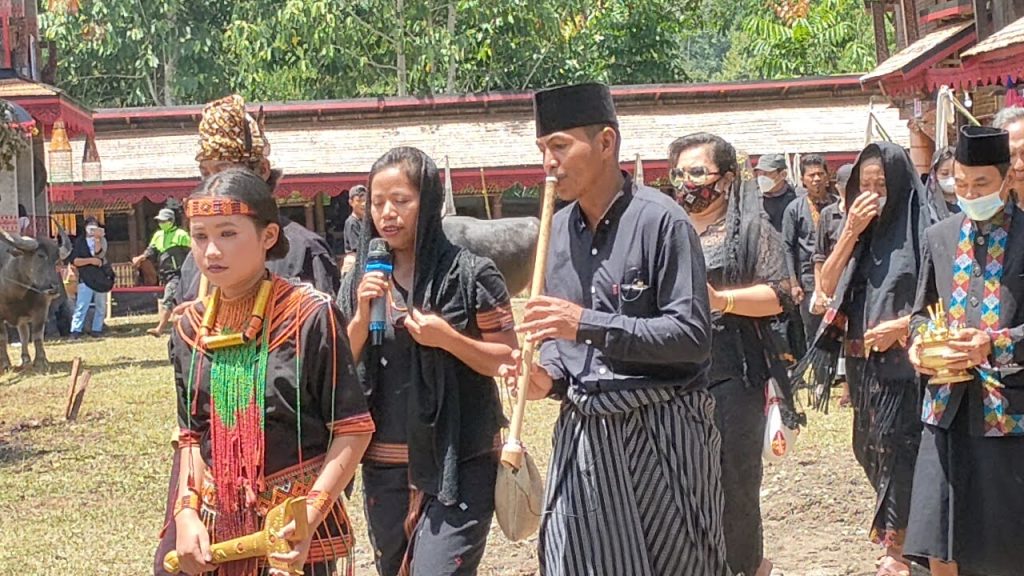
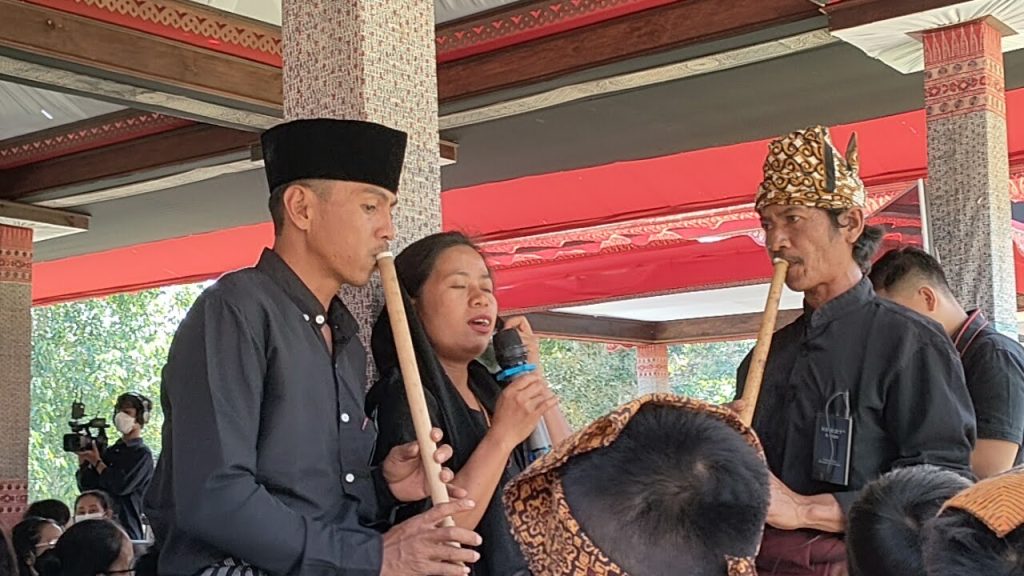
How Pa’marakka Is Performed
Pa’marakka is generally performed in a seated position. The singers and musicians participate in a relatively calm setting, reflecting the solemn nature of the occasion.
The vocal component involves singing traditional lamentations known as bating. These songs express sorrow and remembrance while honoring the person who has passed away.
The performance can also be associated with ma’kampa to mate, a traditional activity involving keeping watch beside the deceased throughout the night.
During these occasions, relatives and community members may remain near the deceased as part of the funeral observances. Traditional singing and flute melodies contribute to the atmosphere of remembrance during the night.
The suling lembang players may sit together in a semicircular formation while performing their melodies. The singers deliver the lamentation in a vocal style that reflects the emotional character of the funeral.
The performance is not necessarily organized like a modern musical concert. Instead, it forms part of a wider traditional ceremony in which different activities take place according to local customs and family arrangements.
Its intimate presentation makes Pa’marakka particularly meaningful. The music is not simply performed for an audience but serves the emotional and cultural needs of the family and community.
The Meaning and Symbolism of Bating
The most important element of Pa’marakka is its expression of grief through bating.
Bating can be understood as a traditional form of lamentation in which sadness is communicated through poetic and musical expression. It provides an opportunity to remember the deceased and acknowledge the emotional connection between the person who has passed away and those who remain.
In many societies, mourning is expressed through crying, silence, prayers, or personal memories. In Torajan culture, traditional lamentation offers another way to communicate these feelings.
Through Pa’marakka, grief becomes a shared cultural experience rather than an entirely private emotion.
The performance may represent several important meanings:
1. Expressing sorrow and loss
Pa’marakka provides a musical form through which family members and participants can express their sadness following the death of a loved one.
2. Honoring the deceased
The lamentation serves as a symbolic farewell and an expression of respect for the individual being remembered.
3. Preserving family memories
Traditional songs can communicate affection, memories, and the importance of family relationships.
4. Strengthening social connections
The participation of musicians, relatives, and community members reflects the collective nature of Torajan funeral traditions.
5. Preserving cultural identity
By continuing to perform Pa’marakka, Torajan communities maintain an important part of their traditional artistic heritage.
These meanings demonstrate that Pa’marakka is more than a musical performance. It is an important cultural expression connected to the values and social relationships of Torajan society.
Pa’marakka and the Rambu Solo’ Funeral Ceremony
To understand Pa’marakka fully, it is important to understand the wider context of Rambu Solo’.
Rambu Solo’ is the traditional funeral ceremony of the Torajan people. It is among the most internationally recognized cultural traditions of South Sulawesi.
The ceremony can involve several days of activities, depending on family circumstances, customary requirements, and the scale of the event.
Traditional funeral gatherings often take place in specially prepared ceremonial areas surrounded by traditional Torajan houses known as Tongkonan.
Important elements of Rambu Solo’ may include:
- Traditional speeches and ceremonial announcements.
- Gatherings of extended family members.
- Traditional music and cultural performances.
- Buffalo and pig offerings according to customary practices.
- Funeral processions and ceremonial activities.
- Traditional lamentations and expressions of mourning.
- Burial arrangements in caves, rock-cut graves, or family burial sites.
Pa’marakka belongs to the musical and emotional dimension of this ceremony. While other activities may involve large gatherings and public celebrations, Pa’marakka provides a more reflective atmosphere focused on loss and remembrance.
It is important to recognize that not every Rambu Solo’ ceremony includes exactly the same performances. Traditional practices can vary between villages, families, and generations.
Nevertheless, Pa’marakka remains an important example of how traditional music contributes to the cultural meaning of Torajan funeral ceremonies.
The Relationship Between Music, Family, and Community
One of the most interesting aspects of Pa’marakka is its relationship with the extended family and wider community.
Torajan society has strong family connections, and traditional ceremonies often involve relatives traveling from different villages and regions to participate.
A funeral is therefore not simply a private family event. It can become a major social gathering involving people who share family relationships, community connections, and customary responsibilities.
In this environment, Pa’marakka provides an opportunity for collective emotional expression.
The musicians and singers contribute to an atmosphere in which the deceased is remembered and honored. Their performance also demonstrates how traditional artistic practices remain connected to everyday social relationships.
For younger generations, witnessing Pa’marakka can provide an opportunity to learn about traditional music, local language, cultural expressions, and the values associated with their ancestral heritage.
This transmission of knowledge is particularly important as modern entertainment and changing lifestyles influence the cultural practices of younger Torajans.
Pa’marakka as an Important Part of Toraja’s Intangible Cultural Heritage
Traditional music is an important component of Indonesia’s cultural diversity. Each ethnic community has its own musical instruments, singing styles, ceremonial performances, and artistic expressions.
In Toraja, Pa’marakka represents a distinctive connection between traditional music and funeral rituals.
Its continued practice depends on the participation of local musicians, cultural practitioners, families, and communities that recognize its importance.
However, like many traditional performing arts, Pa’marakka faces challenges in the modern era.
Younger generations increasingly encounter contemporary music through television, social media, streaming platforms, and modern entertainment. As a result, traditional musical practices may receive less attention outside ceremonial occasions.
Documentation, cultural education, and opportunities for younger musicians to learn from experienced practitioners can help maintain this heritage.
Recording traditional performances also provides valuable material for researchers, students, cultural institutions, and future generations.
Preserving Pa’marakka does not necessarily mean keeping every performance unchanged. It also means ensuring that its original cultural meaning and connection to Rambu Solo’ are understood and respected.
Experiencing Traditional Pa’marakka in Toraja
Toraja is located in the mountainous region of South Sulawesi, Indonesia. Its main tourism areas include Tana Toraja Regency and North Toraja Regency, with Rantepao serving as an important center for visitors exploring the region.
Travelers visiting Toraja can discover a wide range of traditional cultural attractions, including ancestral houses, traditional villages, megalithic sites, cliffside graves, and ceremonial locations.
Some well-known cultural destinations include:
- Kete Kesu – A traditional village famous for its Tongkonan houses, rice barns, and ancestral burial traditions.
- Londa – A traditional burial site featuring caves and wooden tau-tau figures.
- Lemo – A dramatic cliffside burial complex with traditional carved burial chambers and tau-tau statues.
- Suaya – A historical royal burial site associated with the traditional aristocratic families of Toraja.
- Pangli – An area where visitors can explore local traditions and cultural heritage.
Visitors may have opportunities to witness traditional Rambu Solo’ ceremonies depending on the local funeral calendar and family arrangements.
However, these ceremonies are private and meaningful family occasions, not staged tourist attractions. Anyone wishing to observe a performance should first seek permission from the family or local organizers.
Visitors should dress respectfully, follow local guidance, avoid disturbing the ceremony, and ask before taking photographs or recording videos.
If Pa’marakka is performed during a funeral, travelers should remember that they are witnessing an expression of genuine mourning. Respect for the family and the deceased must always come before photography or tourism activities.
Why Pa’marakka Deserves to Be Known Internationally
Pa’marakka offers international audiences a different perspective on the role of music in human life.
In many cultures, music is primarily associated with entertainment, celebration, or artistic performance. In Toraja, however, traditional music can also become an important medium for expressing grief, remembering loved ones, and maintaining cultural relationships.
The combination of bating and suling lembang creates a distinctive musical tradition that reflects the emotional depth of Torajan funeral ceremonies.
It also demonstrates how artistic practices can preserve historical values and strengthen community identity.
For cultural researchers, Pa’marakka provides an interesting subject for studying traditional music, ritual performance, and the relationship between art and social life.
For travelers, it offers an opportunity to understand Toraja beyond its famous traditional houses and spectacular burial sites.
Most importantly, Pa’marakka reminds us that cultural heritage is not limited to buildings, monuments, and archaeological remains. It also exists in songs, voices, musical instruments, memories, and traditions passed from one generation to another.
Conclusion
Pa’marakka is a meaningful traditional musical and lamentation art of the Torajan people, closely associated with the Rambu Solo’ funeral ceremony in South Sulawesi, Indonesia.
Through the emotional singing of bating and the gentle melodies of the suling lembang, this tradition expresses sorrow, respect, remembrance, and the strong relationship between families and their communities.
More than an artistic performance, Pa’marakka represents an important part of Torajan cultural identity. Its continued practice helps preserve traditional knowledge and demonstrates the significant role of music in the cultural and spiritual life of the Torajan people.
For anyone interested in discovering the cultural heritage of Indonesia, learning about Pa’marakka provides a deeper understanding of Toraja and its unique traditions surrounding life, death, family, and remembrance.

Maybe you are interested in reading the following article:
Rambu Solo’ Toraja Schedule December 2026 – January 2027: The Best Time to Experience Toraja’s Traditional Funeral Ceremony
Rambu Solo’ Toraja is one of the most fascinating traditional ceremonies in Indonesia. For international travelers planning to visit Tana Toraja and North Toraja, attending a Rambu Solo’ ceremony offers a rare opportunity to witness the unique culture, ancestral traditions, and social values of the Torajan people. If you are looking for the Rambu Solo’... read more
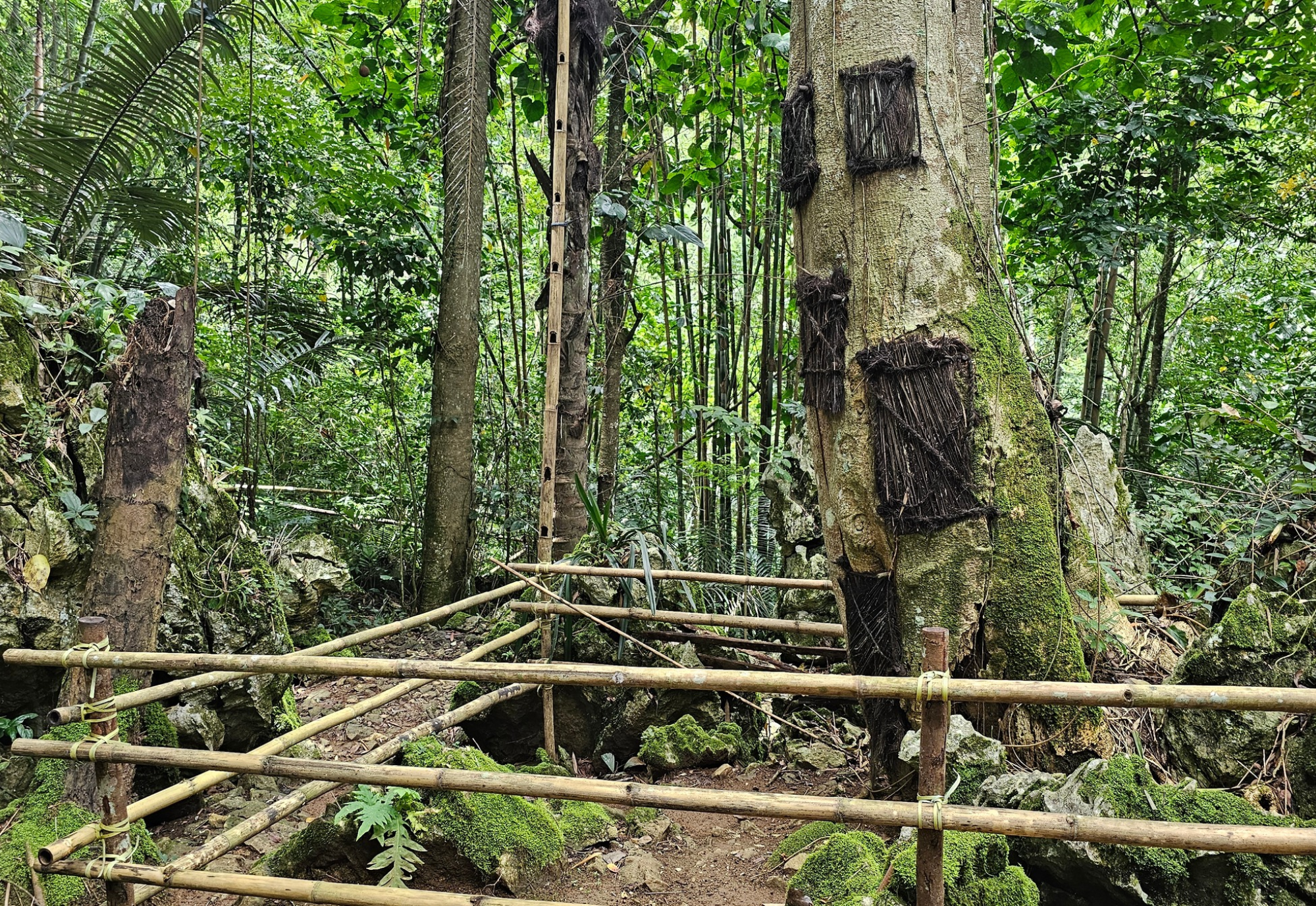
Toraja Baby Graves in Tarra Trees: Discover Kambira and Turunan Baby Burial Sites in Sangalla
Toraja, in South Sulawesi, Indonesia, is famous for its extraordinary funeral traditions, ancient customs, and unique cultural heritage. Among the most fascinating traditions is the practice of burying deceased babies inside the trunks of living trees, known locally as Passiliran. This ancient tradition reflects the cultural beliefs of the Torajan people and... read more
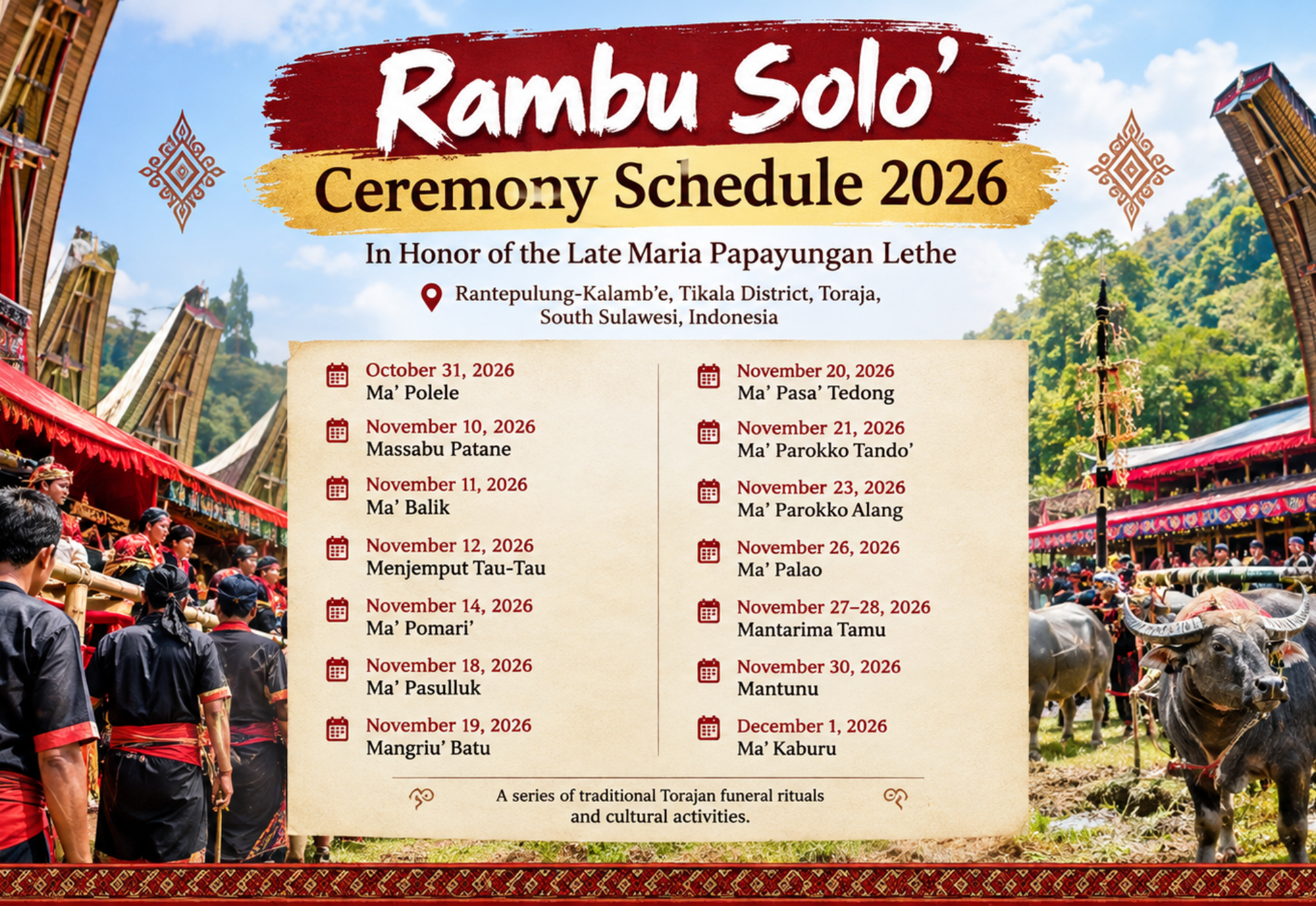
Rambu Solo’ Ceremony for the Late Maria Papayungan Lethe: A Traditional Torajan Funeral Celebration in 2026
The island of Sulawesi in Indonesia is home to many fascinating cultural traditions, and among the most remarkable is the funeral ceremony known as Rambu Solo’. Deeply rooted in the traditions of the Torajan people of South Sulawesi, Rambu Solo’ is a ceremonial event that honors the deceased while bringing together family members, relatives, friends,... read more


Contact Us
If you have any questions, please contact us.
-
Hotline
+62881080121080 -
Whatsapp
+62881080121080 -
Email
amiruddinemail@gmail.com


No comment yet