
Kete Kesu Traditional Village is one of the most famous and historically significant cultural attractions in North Toraja, South Sulawesi, Indonesia. Located in Bonoran Village, Sanggalangi District, approximately 4 kilometers southeast of Rantepao, Kete Kesu offers visitors an extraordinary opportunity to explore traditional architecture, ancient burial traditions, woodcarving heritage, and the cultural identity of the Torajan people.
Recognized as one of the oldest traditional villages in the Toraja region, Kete Kesu is particularly famous for its impressive row of traditional Tongkonan houses, rice barns known as Alang, and ancient stone graves built into the surrounding limestone cliffs.
For international travelers interested in culture, history, architecture, and traditional Indonesian communities, Kete Kesu is an essential destination when exploring Tana Toraja and North Toraja.
Whether you are visiting Toraja for the first time or returning to discover more of its cultural heritage, Kete Kesu provides a fascinating introduction to the traditional way of life of the Torajan people.
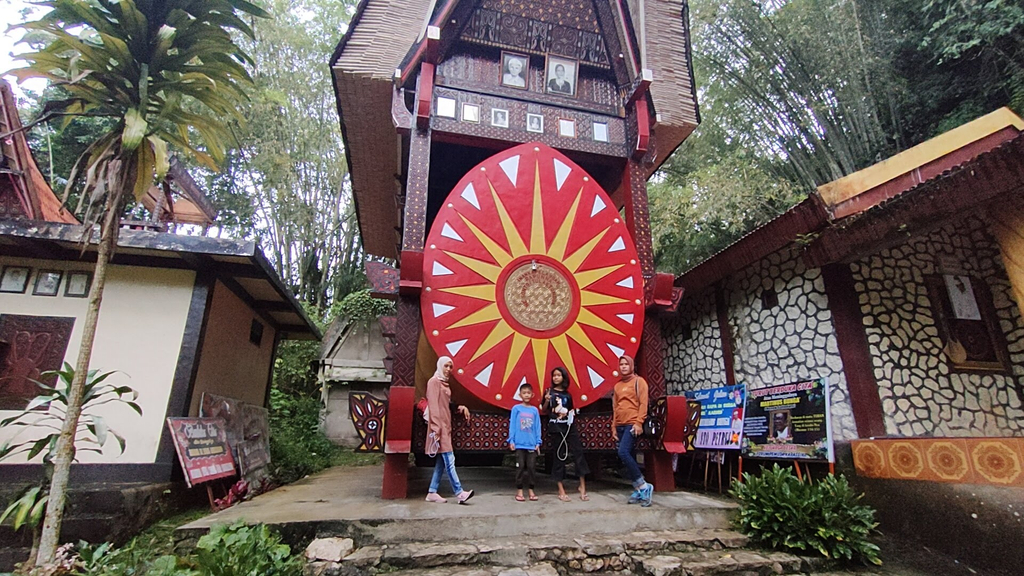
1. The History and Cultural Significance of Kete Kesu
Kete Kesu is widely regarded as one of the oldest traditional settlements in Toraja. Its historical importance is reflected in the traditional houses, ancestral burial sites, and cultural practices that remain visible throughout the village.
The village represents an important part of Torajan identity, particularly the relationship between family, ancestors, land, and traditional beliefs.
For generations, the community has maintained its ancestral customs, including traditional ceremonies, family gatherings, agricultural activities, and woodcarving traditions.
One of the most interesting aspects of Kete Kesu is that it is not simply a collection of old buildings preserved for tourism. It is a cultural landscape connected to the living traditions of the local community.
The Tongkonan houses represent ancestral family structures, while the surrounding burial sites demonstrate the traditional Torajan understanding of death, family relationships, and the afterlife.
Visitors can explore these historical elements while learning how traditional customs continue to influence everyday life in Toraja.
2. Traditional Tongkonan Houses: The Architectural Identity of Toraja
The most recognizable attraction in Kete Kesu is its beautiful collection of traditional Tongkonan houses.
Tongkonan is the traditional ancestral house of the Torajan people. These distinctive wooden buildings are famous for their boat-shaped roofs, elaborate decorations, and symbolic carvings.
Kete Kesu features a remarkable row of six traditional Tongkonan houses, believed to be approximately 300 years old. Facing these houses are 12 traditional rice barns known as Alang.
The arrangement creates a traditional village courtyard that reflects the importance of family and agricultural life in Torajan society.
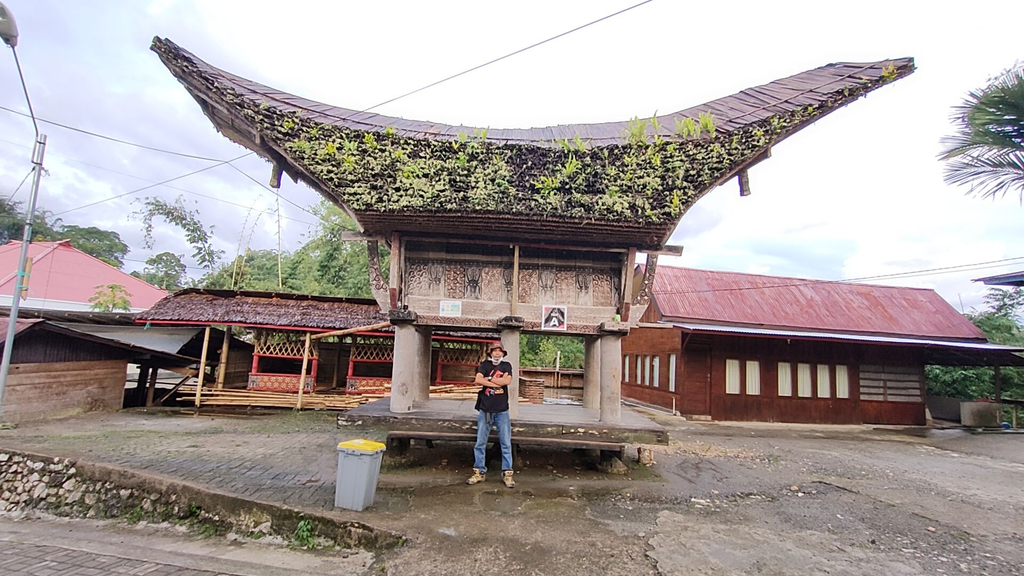
What Makes Tongkonan Architecture Unique?
Tongkonan houses have several distinctive architectural characteristics.
Boat-shaped roofs
The roofs curve upward at both ends, creating a shape that resembles a traditional boat. This distinctive design is one of the most recognizable architectural features of Toraja.
Wooden construction
Traditional Tongkonan houses are constructed primarily from wood, using traditional building techniques passed down through generations.
Traditional carvings
The exterior walls are decorated with intricate carvings representing cultural values, social identity, nature, and traditional beliefs.
Buffalo horn decorations
Buffalo horns are often displayed on the front pillars of Tongkonan houses. The number and arrangement of horns can reflect family history and social prestige.
Understanding the Alang Rice Barns
Opposite the Tongkonan houses, visitors will find traditional rice barns called Alang.
These elevated wooden structures are used to store harvested rice and agricultural products.
The rice barns are supported by wooden or stone pillars, with distinctive roofs that complement the architecture of the Tongkonan houses.
Together, the Tongkonan and Alang form a traditional architectural arrangement that reflects the importance of agriculture, family cooperation, and community life.
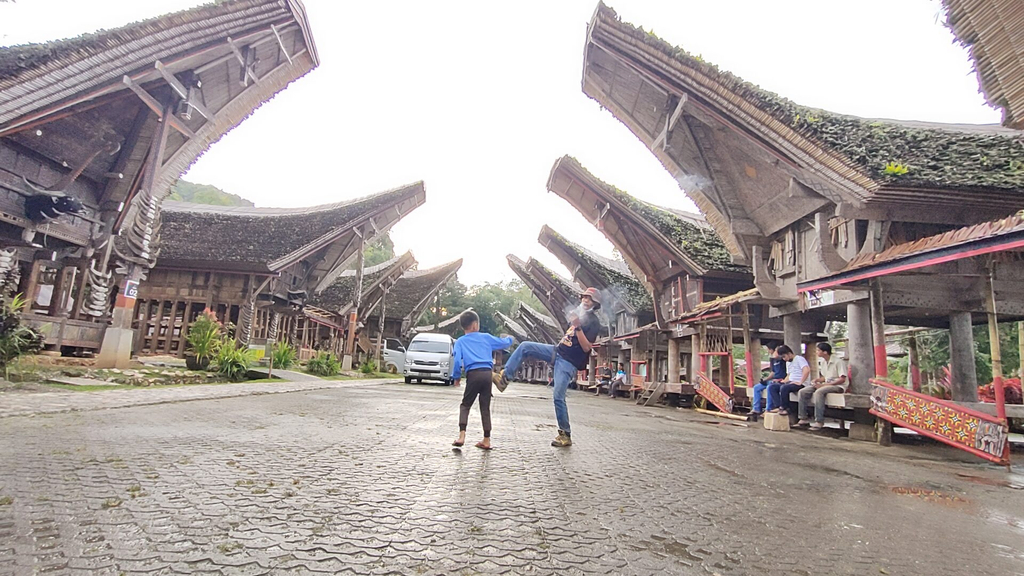
3. The Traditional Ceremonial Courtyard and Menhirs
In front of the Tongkonan houses, visitors can discover a traditional open courtyard containing several large standing stones known as menhirs.
These stones are associated with the megalithic traditions of Toraja and are connected to ancestral ceremonies and traditional social structures.
In Torajan culture, stone monuments have historically played an important role in commemorating individuals and significant events, particularly those associated with traditional funeral ceremonies.
The ceremonial courtyard is also an important gathering space for the community.
During certain traditional events, this area may become a place for family gatherings, cultural activities, and ceremonies.
For visitors, the courtyard offers an opportunity to understand how traditional village architecture is connected to the social and ceremonial life of the Torajan people.
4. Ancient Stone Graves and Cliffside Burial Sites
Behind the traditional village is one of Kete Kesu’s most fascinating attractions: its ancient burial complex.
The burial sites are believed to be more than 500 years old and are located among limestone cliffs, caves, and rocky formations.
Unlike conventional cemeteries, traditional Torajan burial places are often integrated into natural landscapes.
The burial complex demonstrates the unique relationship between the Torajan people, their ancestors, and their traditional beliefs concerning death.
Erong: Traditional Torajan Coffins
One of the most interesting features of the burial complex is the presence of traditional coffins known as Erong.
These wooden coffins come in different shapes, including forms resembling boats and animals.
Their shapes and decorations reflect traditional Torajan cultural symbolism.
Some Erong are placed inside caves, while others are positioned in elevated locations or attached to rocky cliffs.
These burial structures demonstrate the distinctive funeral traditions that make Toraja internationally famous.
Tau-Tau: Wooden Ancestral Effigies
Another remarkable feature of Kete Kesu is the presence of Tau-Tau statues.
Tau-Tau are wooden effigies representing deceased members of the community, traditionally associated with families of particular social standing.
These statues are designed to resemble the deceased and are traditionally placed near burial locations.
They provide an important visual connection between the living community and its ancestors.
For international visitors, seeing Tau-Tau is an opportunity to learn about the cultural and spiritual significance of ancestral remembrance in Torajan society.
Visitors should remember that these burial locations are sacred cultural heritage sites. Photography should be conducted respectfully, and touching or disturbing burial objects should be avoided.
5. Kete Kesu as a Center of Traditional Torajan Woodcarving
Kete Kesu is also famous as a center of traditional Torajan woodcarving.
The traditional carvings, locally associated with Pa’ssura, are an important part of Torajan artistic heritage.
These intricate patterns can be found on Tongkonan houses, rice barns, traditional wooden objects, and various handicrafts.
Torajan woodcarvings are more than decorative artwork. They communicate cultural meanings, family identity, traditional values, and relationships with the natural environment.
Common decorative elements include geometric patterns, animals, plants, and symbolic representations connected to traditional beliefs.
Visitors can explore local handicraft shops and discover handmade wooden souvenirs.
These products may include miniature Tongkonan houses, carved wooden ornaments, traditional accessories, and decorative objects.
Purchasing locally made handicrafts can also help support traditional artisans and the local economy.
6. Traditional Ceremonies: Rambu Solo’ and Rambu Tuka’
Kete Kesu is closely associated with the traditional ceremonial culture of Toraja.
Two important traditional ceremonies are Rambu Solo’ and Rambu Tuka’.
Rambu Solo’: The Traditional Funeral Ceremony
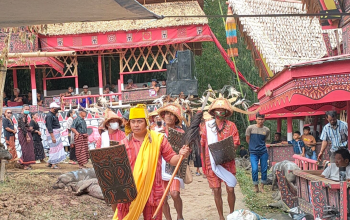
Rambu Solo’ is one of the most important and well-known traditional ceremonies in Toraja.
It is a funeral ceremony organized by families to honor deceased relatives and fulfill traditional obligations.
Depending on family circumstances, social traditions, and local customs, the ceremony can involve several days of activities.
Important elements may include traditional processions, buffalo offerings, family gatherings, traditional music, and community participation.
Buffalo have a particularly important symbolic and social role in Torajan funeral traditions.
For international visitors, attending a Rambu Solo’ ceremony can provide a deeper understanding of Torajan culture.
However, visitors should always remember that this is a family funeral, not a tourist performance. Permission should be requested before taking photographs or recording videos.
Rambu Tuka’: Traditional Thanksgiving and Celebration
Rambu Tuka’ refers to traditional ceremonies associated with gratitude, blessings, prosperity, and important occasions.
These celebrations may be organized for traditional house ceremonies, family events, and other significant community occasions.
While Rambu Solo’ is associated with funeral traditions, Rambu Tuka’ represents celebrations and expressions of gratitude.
Both ceremonies demonstrate the importance of collective participation, family relationships, and traditional values in Torajan society.
7. What Can Visitors See and Do in Kete Kesu?
A visit to Kete Kesu is more than simply taking photographs of traditional houses.
There are several activities that visitors can enjoy during their exploration.
Explore the Tongkonan houses
Walk through the traditional village and admire the six ancestral houses, their distinctive roofs, and traditional carvings.
Discover the ancient burial complex
Explore the surrounding stone graves, caves, hanging coffins, and ancestral statues while learning about traditional Torajan burial customs.
Learn about traditional architecture
Observe the differences between Tongkonan houses and Alang rice barns and understand their functions within traditional family life.
Discover local handicrafts
Visit traditional craft shops and explore handmade woodcarvings and souvenirs.
Take cultural photographs
The traditional houses, limestone surroundings, wooden architecture, and burial sites offer excellent opportunities for cultural photography.
Meet the local community
Depending on availability and community activities, visitors may have opportunities to interact with local residents and learn about traditional customs.
8. Best Time to Visit Kete Kesu
Kete Kesu can generally be visited throughout the year.
However, the experience may differ depending on weather conditions and local cultural activities.
Morning is often an excellent time to visit because the atmosphere is generally quieter and more comfortable for walking and photography.
The period from June to December is also worth considering for travelers interested in traditional ceremonies.
Some Rambu Solo’ ceremonies take place during these months, although there is no guaranteed fixed schedule.
Funeral ceremonies depend on individual family arrangements, so visitors should not assume that a ceremony will take place during their visit.
Travelers interested in attending a traditional ceremony should arrange their itinerary with a knowledgeable local guide who can provide information about appropriate visiting opportunities and cultural etiquette.
9. Location, Entrance Fees, and Visitor Information
Kete Kesu is situated in Bonoran Village, Sanggalangi District, North Toraja Regency, South Sulawesi, Indonesia.
The attraction is approximately 4 kilometers southeast of Rantepao, making it relatively easy to reach from hotels and accommodation in the town.
| Visitor information | Details |
|---|---|
| Destination | Kete Kesu Traditional Village |
| Location | Sanggalangi, North Toraja |
| Nearest town | Rantepao |
| Distance from Rantepao | Approximately 4 km |
| Opening | Generally daily, morning to afternoon |
| Local entrance fee | Approximately IDR 5,000 |
| International visitor fee | Approximately IDR 10,000–30,000 |
| Recommended visit | 1–2 hours |
Important: Entrance fees and operating arrangements may change. Visitors should confirm the latest information with local authorities or their tour operator before visiting.
10. How to Get to Kete Kesu from Makassar
For international travelers arriving in Makassar, the journey to Kete Kesu is part of the adventure of exploring South Sulawesi.
Makassar is the main gateway to Tana Toraja and North Toraja.
The distance between Makassar and Rantepao is approximately 300–350 kilometers, depending on the selected route.
There are two common transportation options.
Overnight Bus from Makassar
Travelers can take an overnight bus from Makassar to Rantepao. The journey generally takes approximately 8–10 hours, depending on road conditions and the bus service.
This option is popular among budget-conscious travelers who want to save daytime hours for exploring Toraja.
Private Transportation
Another option is to arrange a private vehicle with a driver from Makassar.
This provides greater flexibility for stopping at scenic viewpoints, local restaurants, and interesting destinations along the journey.
Upon arrival in Rantepao, visitors can arrange local transportation to Kete Kesu and other attractions throughout North Toraja and Tana Toraja.
11. Combine Kete Kesu with Other Toraja Attractions
Kete Kesu can easily be included in a broader cultural exploration of Toraja.
Several other destinations offer different perspectives on the region’s traditional architecture, burial customs, and natural scenery.
Recommended attractions include:
- Londa: A famous traditional burial cave containing ancient coffins and ancestral remains.
- Lemo: Known for its cliffside graves and rows of Tau-Tau statues.
- Kambira Baby Grave Tree: A traditional burial site where deceased infants were historically placed inside the trunk of a Tarra tree.
- Bori Parinding: A remarkable megalithic site featuring numerous standing stones.
- Kete Kesu: Famous for its traditional Tongkonan houses and ancient burial complex.
Combining these destinations allows visitors to understand the diversity of Torajan heritage within a single journey.
12. Experience Kete Kesu with a Local Toraja Guide
Exploring Kete Kesu with a knowledgeable local guide can make the experience considerably more meaningful.
Although visitors can walk around the village independently, understanding the symbolism of Tongkonan architecture, the significance of Alang rice barns, and the traditions behind ancient burial sites requires cultural context.
A local guide can explain the historical background of the village, introduce traditional Torajan expressions, and help visitors understand the importance of ancestral customs.
For international travelers, having an English-speaking guide is particularly useful when exploring cultural destinations throughout North Toraja and Tana Toraja.
At Sekeluarga Healing Adventure, we offer private Toraja tours designed for international visitors, couples, families, and independent travelers.
Our tours can include Kete Kesu, Londa, Lemo, Kambira, Bori Parinding, traditional villages, cultural landmarks, and beautiful highland landscapes.
Travelers can choose private transportation, local guides, and customized itineraries according to their available time and travel interests.
Whether you are planning a 2-day, 3-day, or longer Toraja adventure, we can help organize a comfortable journey from Makassar to the Toraja highlands.
Conclusion: Why Kete Kesu Should Be on Your Toraja Travel Itinerary
Kete Kesu is one of the most remarkable cultural destinations in North Toraja. Its approximately 300-year-old Tongkonan houses, traditional rice barns, ancient stone graves, Erong coffins, Tau-Tau statues, and woodcarving traditions offer visitors an unforgettable introduction to Torajan heritage.
More importantly, Kete Kesu provides an opportunity to understand the cultural values that continue to shape the lives of the Torajan people.
For travelers interested in Indonesian history, traditional architecture, ancestral burial customs, and authentic cultural experiences, this village deserves a place on every Toraja travel itinerary.
Discover the cultural heritage of Toraja with Sekeluarga Healing Adventure. Explore Kete Kesu and other fascinating destinations through a private tour accompanied by local people who know and understand the region.
Visit our website: https://torajatravelguide.com/ or https://www.sekeluargahealing.com/ to plan your Toraja journey.

Maybe you are interested in reading the following article:
Kete Kesu Village: Discover the Ancient Tongkonan Houses, Traditional Culture, and Cliffside Tombs of Toraja
Kete Kesu Traditional Village is one of the most famous and historically significant cultural attractions in North Toraja, South Sulawesi, Indonesia. Located in Bonoran Village, Sanggalangi District, approximately 4 kilometers southeast of Rantepao, Kete Kesu offers visitors an extraordinary opportunity to explore traditional architecture, ancient burial tra... read more
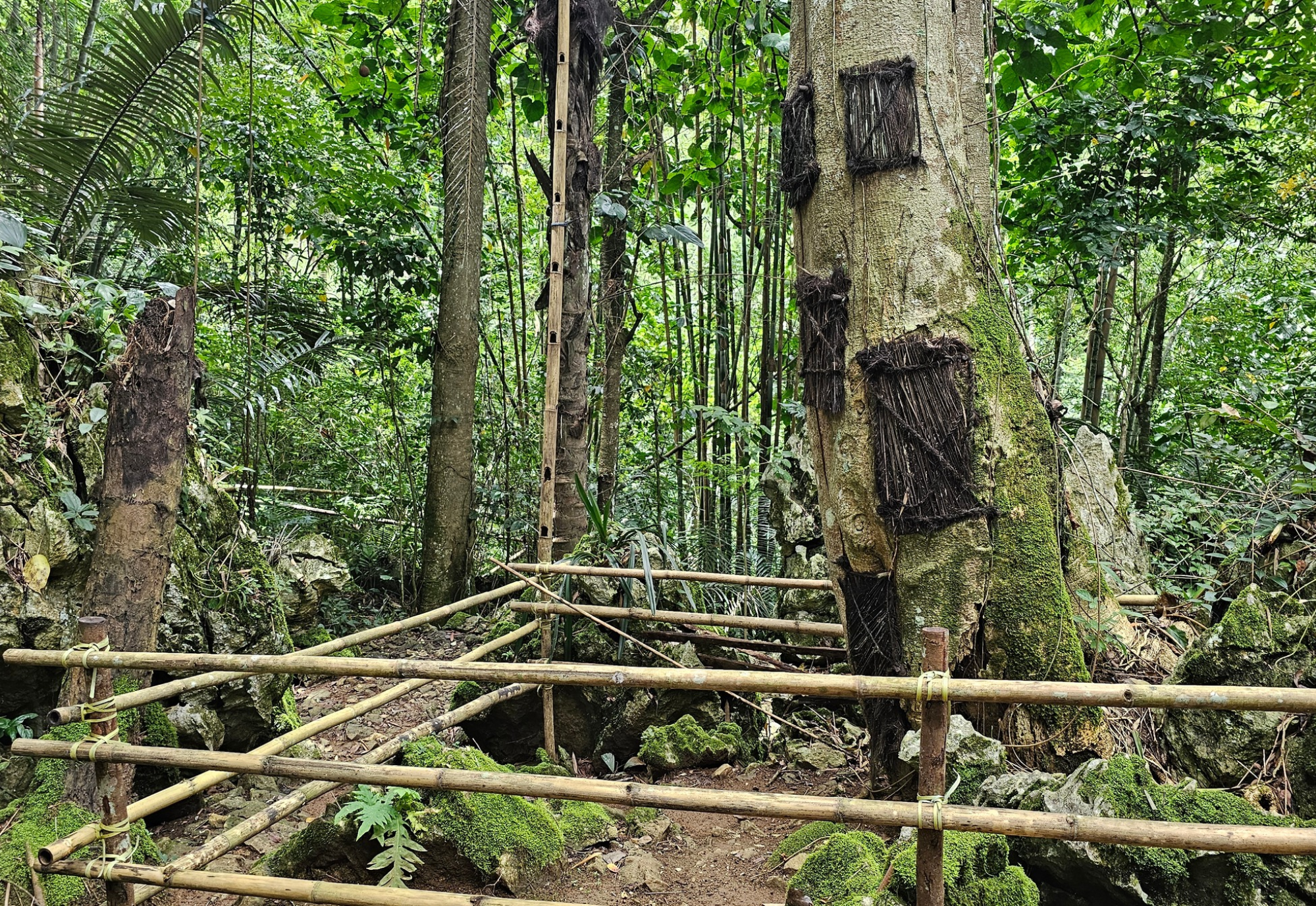
Toraja Baby Graves in Tarra Trees: Discover Kambira and Turunan Baby Burial Sites in Sangalla
Toraja, in South Sulawesi, Indonesia, is famous for its extraordinary funeral traditions, ancient customs, and unique cultural heritage. Among the most fascinating traditions is the practice of burying deceased babies inside the trunks of living trees, known locally as Passiliran. This ancient tradition reflects the cultural beliefs of the Torajan people and... read more
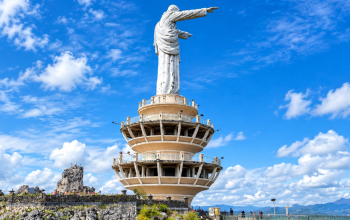
Buntu Burake Toraja: Discover the Magnificent Jesus Christ Statue and Glass Bridge in Tana Toraja
Buntu Burake is one of the most remarkable religious and nature tourism destinations in Tana Toraja, South Sulawesi, Indonesia. Located in Buntu Burake Village, Makale District, Tana Toraja Regency, this spectacular hilltop attraction is famous for its enormous Jesus Christ Blessing Statue, which stands majestically above the surrounding mountains. Approxima... read more
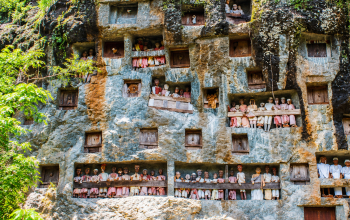
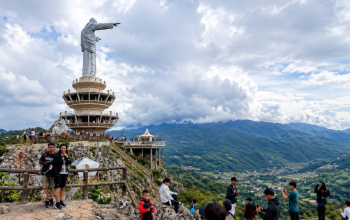

Contact Us
If you have any questions, please contact us.
-
Hotline
+62881080121080 -
Whatsapp
+62881080121080 -
Messenger
amiralmaruzy -
LINE ID
torajatravelguide -
Email
amiruddinemail@gmail.com


No comment yet